An elevator bolt is a fastener with a wide, thin, flat head and a partially threaded shank, built to hold material together without leaving a bulky head in the way. If you have ever wondered what an elevator bolt is and why it looks so different from a hex bolt, the answer comes down to where it works: on belts, buckets, and thin materials where anything that sticks up can snag, wear, or interfere with moving parts.
This guide covers what elevator bolts are, how they got their name, and which design features set them apart. You will also see how they compare with standard and carriage bolts, where they are used, how to choose the right size, material, and head style, and what to know about installation before you order.
What Is an Elevator Bolt?
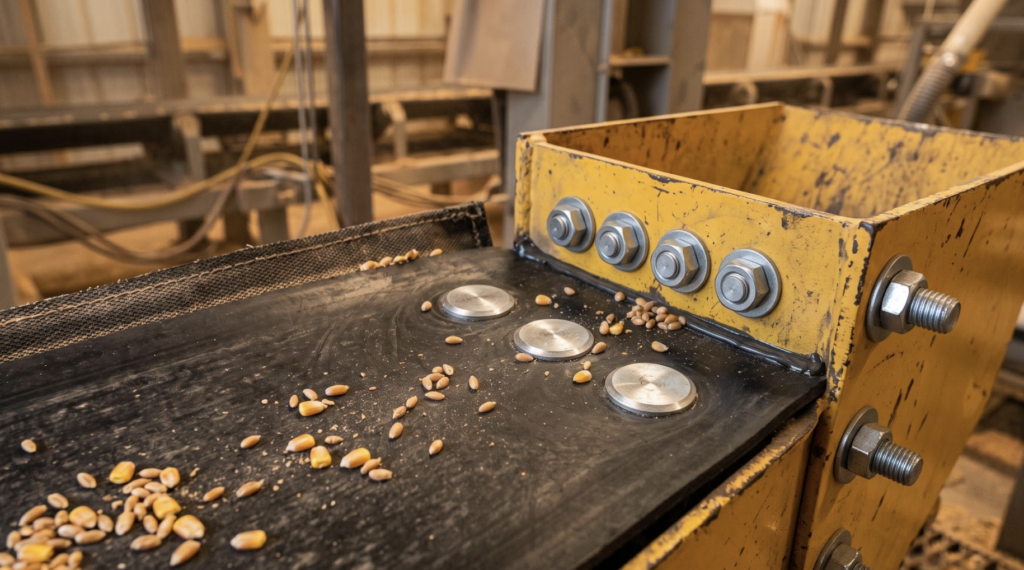
An elevator bolt is a specialized type of fastener with a large, flat, low profile head, a square neck beneath the head to prevent spinning, and a shank that is usually partially threaded. The wide, shallow head spreads clamping force across a larger area, which makes the bolt well suited to thin or soft materials like belting. The low profile head sits nearly flush, so material can pass over it without catching.
Elevator bolts are commonly made from carbon steel or stainless steel, and they are designed for low profile fastening applications where a protruding head would cause problems.
Why Are They Called Elevator Bolts?
The name comes from the bucket elevator. Elevator bolts were originally designed to attach buckets to the belts on bucket elevators and conveyors, and the broad, shallow head resembles the shape of an elevator bucket. Those systems lift bulk material such as grain, and every bucket has to stay firmly attached as the belt travels around its path.
The thin head is the reason these bolts suited the job. A tall head would catch on pulleys, housings, and passing material. A shallow head keeps interference to a minimum, so the belt runs smoothly and the bolts stay out of the way.
Today, the name is a little misleading. Elevator bolts are now far more common outside passenger elevators than in them. You will find them on conveyor systems, agricultural equipment, industrial machinery, and even in furniture, anywhere a flat, wide head solves a clearance problem.
Elevator Bolt Design and Key Features
Two features distinguish an elevator bolt from other fasteners: the head and the threading. Each one affects how the bolt performs in your application, so it helps to look at them separately.
Flat, Wide, Shallow Head
The shallow head is the defining feature of an elevator bolt. Because it has such a low profile, it sits flush against the surface, and material moving across it has very little to snag on. That matters on a conveyor belt, where a raised head can catch on material, wear against components, or cause a jam.
The width of the head matters just as much. A large, flat head creates a wide bearing surface, which spreads the load over more of the material. This is why elevator bolts work well with thin materials like belting, where a small head could pull through or crush the surface. The oversized head distributes clamping force across a wider area and reduces the chance of damage.
Partially Threaded Shank
Most elevator bolts are partially threaded, with threading that typically runs half to three quarters of the shank length. Elevator bolts can also be made with fully threaded shanks, but a partial thread is the standard design. If you are weighing the two options, our guide to full thread bolts vs partial thread bolts explains when each one makes sense.
The smooth portion of the shank sits through the joined materials, while the threaded portion engages the nut. That separation gives you a strong, secure hold. The unthreaded section carries the load without the stress concentration that threads can introduce, and the square neck under the head locks into the hole so the bolt does not spin while you tighten the nut.
Common Head Styles
Elevator bolts are not all identical, and head style is one of the main ways they vary.
No. 1 and No. 3 heads are the two standard head sizes you will see. They differ in head diameter and thickness, so the right choice depends on the material you are fastening and how much bearing surface you need. Check the head dimensions against your belting or material before ordering.
Slotted heads include a slot across the top of the head, which allows you to hold the bolt in place with a screwdriver while you tighten the nut from the other side. This is helpful during installation when the bolt tends to turn.
Fanged elevator bolts have small projections, called fangs, under the head. The fangs bite into the material as you tighten, which helps resist spinning and loosening. They are a good option for softer materials where a square neck alone may not hold the bolt steady.
Elevator Bolts vs Standard Bolts
Elevator bolts and standard bolts both clamp materials together, but they are built for different jobs. A standard bolt is made to handle high torque and heavy structural loads. An elevator bolt is made to fasten thin materials while staying out of the way.
| Feature | Elevator Bolt | Standard Bolt |
|---|---|---|
| Head shape | Thin, round, flat | Thick, hexagonal |
| Head profile | Low profile, wide | Raised, narrower relative to height |
| Threading | Usually partially threaded | Generally fully threaded |
| Neck | Square neck to prevent spinning | Typically none |
| Installation torque | Lower, tightened from the nut side | Higher, tightened with a wrench on the head |
| Typical use | Low clearance applications, belting, thin materials | General structural and mechanical fastening |
Torque is one of the biggest practical differences. A hex head lets you apply a wrench directly and tighten with high torque. An elevator bolt has no wrench flats, so you hold it by the square neck or a slot and tighten the nut. That is sufficient for thin materials, but it also means you should not treat an elevator bolt as a replacement for a high strength structural bolt.
Elevator Bolts vs Carriage Bolts
Carriage bolts and elevator bolts are both low profile bolts, and they are easy to confuse. Both have a square neck that keeps the bolt from turning, and neither has a wrench head. The differences are in the head and the grip.
An elevator bolt has a much wider and thinner head than a carriage bolt. A carriage bolt has a domed, rounded head that is smaller in diameter and thicker in the middle, which gives it a smooth, finished look but a smaller bearing surface. The elevator bolt’s broad, flat head spreads the load further, which is why it holds thin and soft materials better. If you are fastening belting or sheet material, an elevator bolt is usually the right call. If you are joining wood or need a rounded, tamper resistant head, a carriage bolt may fit better. You can browse BoltCraft’s carriage bolts if your application calls for one.
Where Are Elevator Bolts Used?
Elevator bolts show up in any industry that moves bulk material or joins thin stock. The biggest uses are conveyor and bucket elevator systems, agriculture, mining, cement and concrete production, food processing, and woodworking. Each of these relies on the same advantage: a flat head that stays out of the way.
Conveyor Belts and Bucket Elevators
Conveyor belts and bucket elevators are the original use for elevator bolts and still the most common. In a bucket elevator system, elevator bolts secure the buckets to the belt, and in conveyor systems they hold belting and attachments in place.
A flush head matters here because material passes directly over it. A tall head would catch on grain, aggregate, or other bulk material, which can slow the line, damage the belt, or wear the bolts down faster. A flat, low profile head lets material slide across, and the wide head keeps the bolt from pulling through the belt.
Agricultural and Industrial Equipment
Agriculture is a major user of elevator bolts. They are commonly used in grain elevators and conveyor systems, where buckets and belts move harvested material from one point to another. The same applies to material handling equipment and bulk conveyors across industrial operations.
Elevator bolts also secure components in mining operations and are used in cement and concrete production, where abrasive material moves constantly across belts and equipment. They are essential in food processing facilities as well, where conveyors run continuously and stainless steel options help the hardware stand up to washdowns and moisture.
If you build or maintain equipment for agricultural or industrial customers, this is the kind of fastener that keeps your machines running. BoltCraft works with agricultural and industrial OEMs, so these are applications we understand well.
Furniture and Woodworking
Elevator bolts are also used in woodworking where a smooth finish is required. In furniture, they join thin materials where a low profile is needed, such as metal brackets to wood panels or thin steel components. The wide head spreads the clamping force so it does not dig into softer surfaces, and the flat profile leaves a clean finish with nothing sticking out to catch on clothing or other surfaces.
How to Choose the Right Elevator Bolts
Not all elevator bolts are the same, and the right one depends on your application. Choosing a bolt that does not match your belt, your material, or your environment is one of the fastest ways to end up with loosening, wear, or failure. The three factors below will help you narrow the options: size, thread, and length; material, finish, and grade; and head style.
Size, Thread, and Length
Elevator bolts must match the correct diameter and length for your application. Common diameters range from 1/4 to 1/2 inch, and coarse thread is a common option. Make sure your hole size, belt, or bucket is compatible with the diameter you choose.
For length, add up the thickness of everything the bolt has to pass through: the belt, the bucket or attachment, the washer, and the nut. The bolt should extend far enough past the nut for full thread engagement, but not so far that the extra shank gets in the way of moving parts. A bolt that is too short will not hold securely, and one that is too long can create the very interference you were trying to avoid.
Material, Finish, and Grade
Material affects how long the bolt lasts. Stainless steel elevator bolts resist corrosion in humid environments, which makes them a good choice for wet conditions, food processing, and outdoor equipment. Carbon steel elevator bolts are stronger but less corrosion resistant, so they suit dry environments where strength matters most.
Finish adds another layer of protection. Elevator bolts are available in plain, zinc plated, and galvanized finishes. A plain finish offers no added protection and works best indoors in dry conditions. Zinc plating adds a corrosion barrier for moderate exposure, and galvanized finishes offer heavier protection in rougher conditions.
Grade 2 is a common grade for conveyor use. Choosing the right material and grade for your environment ensures longevity and helps you stay in compliance with any requirements your equipment has to meet.
Head Style
Match the head to the job. No. 1 and No. 3 heads differ in diameter and thickness, so pick the one that gives your belt or material enough bearing surface without exceeding your clearance. A slotted head is useful when you need to hold the bolt steady during installation. A fanged elevator bolt is a better pick for softer materials, where the fangs can bite in and help prevent spinning and loosening over time.
Nuts, Washers, and Installation Tips
An elevator bolt is only as good as the hardware it is paired with. Use hex nuts that match the bolt’s diameter and thread, and add washers where you need to spread the load on the nut side or protect the material from the nut. If you are unsure which washer fits, our breakdown of SAE vs USS flat washers can help. Pairing the right nut and washer with your bolt helps keep the joint tight under vibration, which is a constant on conveyors and agricultural equipment.
Hole fit matters because of the square neck. The hole should be sized so the neck seats snugly and holds the bolt in place as you tighten. A hole that is too large lets the bolt turn, and a hole that is too small can damage the material or prevent the head from sitting flat. Many belts use a punched square or matching hole for this reason.
When you tighten, remember that you are working with thin materials. Apply torque to the nut while holding the bolt by the square neck or slot, and tighten until the joint is secure without crushing or distorting the belt or panel. Overtightening can pull the head into soft material and compromise the flat profile, which defeats the purpose of using an elevator bolt. After installation, check the joint periodically for loosening, especially in high vibration applications where safety and uptime depend on the fasteners staying put.
Common Elevator Bolt Sizes and Specifications
The table below shows typical elevator bolt options. Lengths vary widely by application, so confirm the exact sizes available for your project.
| Diameter | Threads Per Inch (Coarse) | Typical Lengths | Common Materials | Common Finishes |
|---|---|---|---|---|
| 1/4 inch | 20 | Varies by application | Carbon steel, stainless steel | Plain, zinc plated, galvanized |
| 5/16 inch | 18 | Varies by application | Carbon steel, stainless steel | Plain, zinc plated, galvanized |
| 3/8 inch | 16 | Varies by application | Carbon steel, stainless steel | Plain, zinc plated, galvanized |
| 1/2 inch | 13 | Varies by application | Carbon steel, stainless steel | Plain, zinc plated, galvanized |
If you need a size, length, or finish that is not listed, contact BoltCraft and we can help you find the right match.
Where to Buy Elevator Bolts
Where you source your fasteners matters as much as which ones you choose. A reliable fastener supplier gives you consistent quality, accurate specifications, and parts that arrive when your operation needs them. Inconsistent or mislabeled hardware can lead to downtime, rework, and failures that cost far more than the fasteners themselves.
BoltCraft supplies fasteners to agricultural OEMs, industrial, automotive, and heavy duty construction customers. Here is what you can expect when you work with us:
- Quick quote responses so you can keep your project moving.
- Stock and release services that let you commit to a volume and have parts released as you need them.
- Bulk discounts that help your budget go further on larger orders.
- Fast lead times and USA shipping to keep your production schedule on track.
- A 100% OEM satisfaction guarantee backing every order.
As an independent, family owned business, BoltCraft puts customer service and strong partnerships first. Request a quote to get started, or browse our elevator bolts, hex nuts, washers, and carriage bolts to pick up everything you need in one order.
Frequently Asked Questions About Elevator Bolts
Here are quick answers to the questions we hear most often about elevator bolts.
What is an elevator bolt used for?
Elevator bolts are used mainly to secure buckets and belting on conveyor belts and bucket elevators. They are also common in agricultural equipment and are used to join thin materials where a low profile head is needed.
Why is it called an elevator bolt?
The wide, shallow head resembles an elevator bucket. The bolts were originally used to attach buckets to belts on bucket elevators, and the name stuck.
What is the difference between an elevator bolt and a carriage bolt?
An elevator bolt has a wider, thinner, flat head, while a carriage bolt has a smaller, domed head that is thicker in the center. Elevator bolts are typically used on belting and thin materials, and carriage bolts are more common in wood and general fastening.
Are elevator bolts fully threaded?
Most elevator bolts are partially threaded, with threading that runs half to three quarters of the shank. Fully threaded versions are available, but they are less common.
What material is best for elevator bolts?
It depends on your environment. Stainless steel is best for corrosion resistance in humid or wet conditions, while carbon steel offers more strength in dry environments.
Choosing the Right Elevator Bolt for Your Application
Elevator bolts solve a specific problem: fastening thin materials securely while keeping the head flat and out of the way. The flat, low profile head and partially threaded shank make them a natural fit for conveyor systems, bucket elevators, agricultural and industrial equipment, and furniture. Choosing the right size, material, finish, and head style for your application keeps your equipment running and your joints tight.
When you are ready to order, request a quote or contact BoltCraft. Our team can help you find the right elevator bolts for your operation.