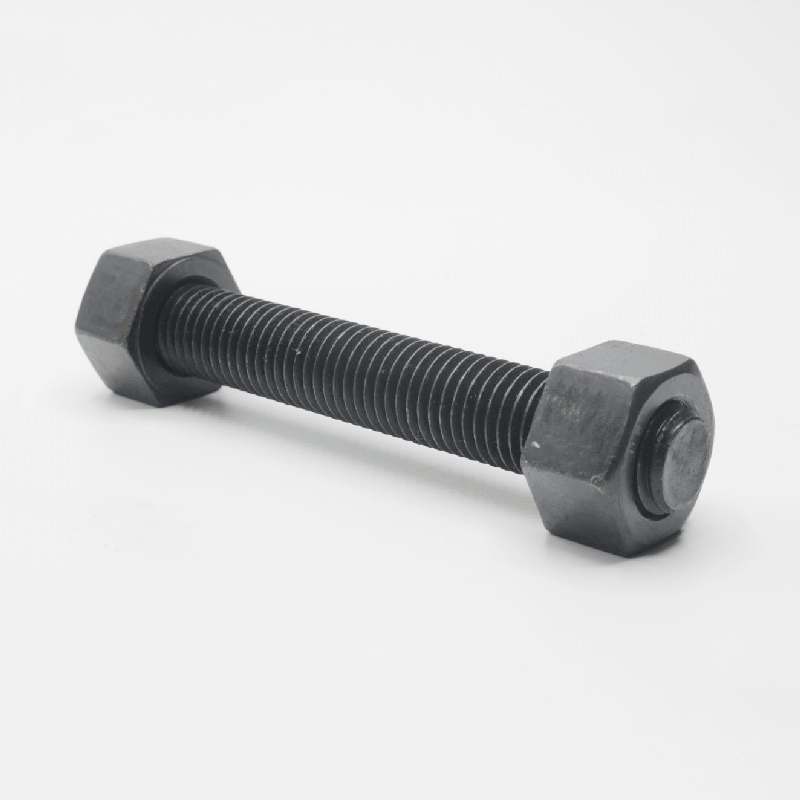
If you’ve ever wondered how to anchor threaded rod in concrete, the process is simpler than it looks, but it requires attention to detail. When your project involves heavy loads, constant vibration, or structural support, you need anchor bolts and fully threaded rods that can deliver the high strength connection your design demands.
Threaded rods and anchor rods are used every day in the field, whether for steel columns, machinery, or handrails. These aren’t decorative pieces, they’re load-bearing anchors designed to hold fast under demanding applications. Installing them properly ensures the connection won’t loosen, pull, or fail under stress. The BoltCraft team will walk you through what your options are for anchoring a threaded rod in concrete and how to do it.
Key Takeaways:
- Anchoring threaded rod in concrete requires precision drilling, thorough cleaning, and careful selection of your anchoring method.
- Drop-in anchors are ideal for tight spaces and overhead work, offering a quick and secure mechanical hold.
- Epoxy anchoring provides a permanent bond suitable for high-load and vibration-prone applications.
- Proper hole cleaning with a wire brush and compressed air is critical for ensuring long-term anchor performance.
- Always follow manufacturer specifications for hole diameter, depth, and curing time to avoid installation failure.
- BoltCraft supplies high-quality threaded rods, anchoring epoxy, and fasteners engineered to meet the demands of any concrete anchoring job.
Tools & Materials You’ll Need
Before you install any anchors, take a moment to get your setup right. We’ve all been there, halfway through drilling only to realize we grabbed the wrong bit diameter or skipped gloves. Let’s avoid that.
General Tools for Both Methods
- Hammer drill with a carbide-tipped bit sized for your anchor diameter
- Wire brush for cleaning the hole
- Compressed air or vacuum to clear dust and debris
- Safety goggles and gloves, concrete dust and anchoring epoxy don’t mix well with eyes or skin
Additional Materials by Anchoring Method
For Drop-In Anchors:
- Drop-in anchor
- Setting tool, crucial for expanding the anchor inside the hole
- Wrench to tighten the nut and threaded rod securely
For Epoxy Anchoring:
- Two-part anchoring epoxy adhesive for masonry or concrete
- Epoxy dispensing gun for controlled flow
- Mixing nozzle for consistent application
- Threaded rod or anchor bolt, clean and to spec
Method 1 – Anchoring Threaded Rod Using Drop-In Anchors
When space is tight or you’re working overhead, drop-in anchors are your go-to solution. They’re quick to set, reliable, and perfect for contractors who need something that fits the job and holds under heavy loads.
Step 1: Drill the Hole
Start by drilling a hole using your hammer drill. Follow the anchor manufacturer’s specs for depth and diameter. The goal? A perfect fit, not too shallow, not too deep. Go off-center or use the wrong bit size, and your anchor might not set correctly, leaving you with a compromised hold.
Step 2: Clean the Hole Thoroughly
Here’s where most people slip up. Dust is the enemy of anchoring. Use a wire brush to scrub, then blow or vacuum out the debris. A clean hole allows full anchor contact and ensures it is not compromised because of the dust and debris in the hole. Skipping this step? That’s a recipe for failure.
Step 3: Insert the Drop-In Anchor
Insert the anchor into the hole, slotted side down, until it’s flush with the surface. Tap it gently, not like you’re driving a nail, but with enough persuasion to get it seated. If it’s sitting proud or recessed, your depth is off. Don’t worry; every contractor has done it once.
Step 4: Expand the Anchor
Insert the setting tool into the anchor and strike it until you feel the resistance change. That’s the internal wedge expanding, gripping the concrete, and creating a mechanical bond strong enough to resist pulling or shear forces.
Step 5: Install the Threaded Rod
Finally, thread your rod into the anchor until it’s snug. Don’t over-torque, especially on lighter-duty applications. Tighten with a wrench, attach your nut and plate as needed, and you’re done. In steel fabrication or pipe hanging, this setup gives a solid, reliable hold that meets most project requirements.
When you understand the principles and the specific anchoring application, the rest becomes second nature. And if your next job calls for anchoring into wet concrete, using epoxy, or choosing between cast-in and drilled methods, we’ve got you covered.
Method 2 – Anchoring Threaded Rod with Epoxy Adhesive
When you’re trying to secure a threaded rod into concrete and need a permanent bond that can stand up to heavy loads, anchoring epoxy is often the best tool in the toolbox. Whether you’re working with foundations, handrails, or structural steel, this method delivers strength, flexibility, and long-term reliability, assuming it’s done right. So, let’s get into how to anchor threaded rod in concrete using epoxy, based on real-world experience, not just theory.
Step 1: Drill an Oversized Hole
Let’s start with the hole, arguably the most important part of any anchor bolt installation. You’ll want to drill a hole slightly larger than the diameter of your threaded rod. This gap allows the anchoring epoxy to flow around the thread and create full contact between the rod and the concrete, forming a high strength anchor point.
Manufacturers of epoxy and fully threaded rods provide detailed specs for hole depth, width, and edge spacing, watch for those details, because ignoring them is a recipe for failure. And yes, we’ve seen anchors fail because of this.
Step 2: Clean the Hole Completely
Dust kills bonds. If you don’t clean the hole properly, your anchor rods won’t hold up, especially in applications subjected to vibration or pull-out force. Use a wire brush and compressed air, brushing and blowing in cycles until the hole is spotless. Some crews also use a template to ensure the hole stays centered and aligned during this process. That’s not overkill, it’s just good craftsmanship.
Step 3: Mix and Inject Epoxy
Next up: epoxy. Some call it adhesive, others call it chemical anchors. Either way, this stuff is what makes or breaks your anchor. For most project requirements, use a two-part anchoring epoxy, delivered through a pre-loaded cartridge with a mixing nozzle.
The idea is to fill the hole about two-thirds full, allowing for epoxy displacement as you insert the rod. Don’t overfill, it’ll leave you with a mess, wasted product, and possibly a bolt that doesn’t sit flush. This step takes finesse, but you’ll get the hang of it after a few jobs.
Step 4: Insert the Threaded Rod
Now it’s time to install. Slowly insert the threaded rod, twisting as you push. The twisting action does a few things, it spreads the epoxy evenly across the threads, reduces air pockets, and ensures full embedment.
If the rod stops short, back off and double-check: Is your hole deep enough? Is there rebar or an object in the way?
Step 5: Allow Proper Curing Time
You’re not done yet. Epoxy needs time to set, and how long depends on the grade of adhesive, temperature, and even humidity. In warm conditions, it could be ready in 2 hours; in cooler climates or wet concrete, it may take 24.
You’ll want to cancel any loading during this time. No tugging, testing, or even brushing up against it. Just set it and walk away. Trying to rush things could compromise the bond strength, putting your entire project at risk.
Final Tips for Successful Anchoring
By now, you understand the basics, but precision and patience are what make the difference. Anchoring isn’t just about setting a rod in a hole; it’s about ensuring the installation will hold under load, vibration, and time.
- Follow manufacturer instructions. Every epoxy or mechanical anchor has specific curing times, embedment depths, and diameter recommendations. Whether you’re setting a drop-in anchor bolt or securing threaded rods with epoxy, details matter.
- Mark the drilling depth with tape. It’s a simple hack: wrap tape around your bit to mark how deep to drill or use a depth gauge if your drill has this option. This avoids over or under drilling and ensures the anchor is set at the correct depth, even in tight or awkward configurations.
- Test before going all in. Working with a new epoxy or unfamiliar concrete grade? Try a test anchor first. Drill, clean, inject, and set a sample piece to confirm it holds as expected before committing to the full installation.
Remember, each job is different. A rod embedded in a small concrete pad won’t face the same forces as one set in a multi-story building foundation. Always adapt your approach depending on the load, environment, and materials involved.
Understanding How To Anchor Threaded Rod In Concrete
When you truly understand how to anchor threaded rod in concrete, you realize it’s more than just drilling and filling. It’s about craftsmanship, judgment, and respect for the materials. From the diameter of your drill bit to the grade of your steel, every detail contributes to a secure, high-strength connection.
Anchoring epoxy offers a permanent bond for high-load or vibration-prone applications, while drop-in anchors and cast anchor bolts deliver speed and convenience when the situation allows. At the end of the day, a well-installed threaded rod should feel solid, centered, and ready to deliver on its purpose. So take your time and follow the specs.