Bolts are essential fastening components that play a critical role in securing materials together in a wide range of applications. Among the many varieties available, carriage bolts and hex bolts stand out for their prevalence and versatility. Whether you are involved in construction projects, woodworking, or manufacturing, understanding the key differences between carriage bolts and hex bolts can help you select the best fastener for your specific needs. Both types of bolts serve unique purposes, offering distinct design features, installation methods, and functional benefits that cater to different applications.
What is a Hex Bolt?
Hex bolts are one of the most commonly used types of bolts in fastening applications, characterized primarily by their hexagonal head. This hexagonal head allows for easy tightening and loosening using a wrench or a socket, making them user-friendly and efficient fasteners. The hex head provides a secure grip, which is particularly effective in industrial and heavy-duty environments.
Types of Hex Bolts
Among the various hex bolts, hex machine bolts are especially noteworthy. These bolts typically feature machine threads that are designed to engage with tapped holes or nuts, making them suitable for applications requiring precision and strong fastening in metal-to-metal connections. Hex machine bolts excel in construction projects and industrial machinery assembly where durability and load-bearing capacity are critical.
Materials and Sizes
Hex bolts come in an array of materials including stainless steel, carbon steel, and alloy steel, catering to different environmental and strength requirements. Sizes range from small diameters suitable for light-duty applications to large, heavy-duty bolts designed for maximum strength and reliability. The availability of different lengths, diameters, and thread pitches allows you to find hex bolts perfectly matched to the job at hand.
What is a Carriage Bolt?
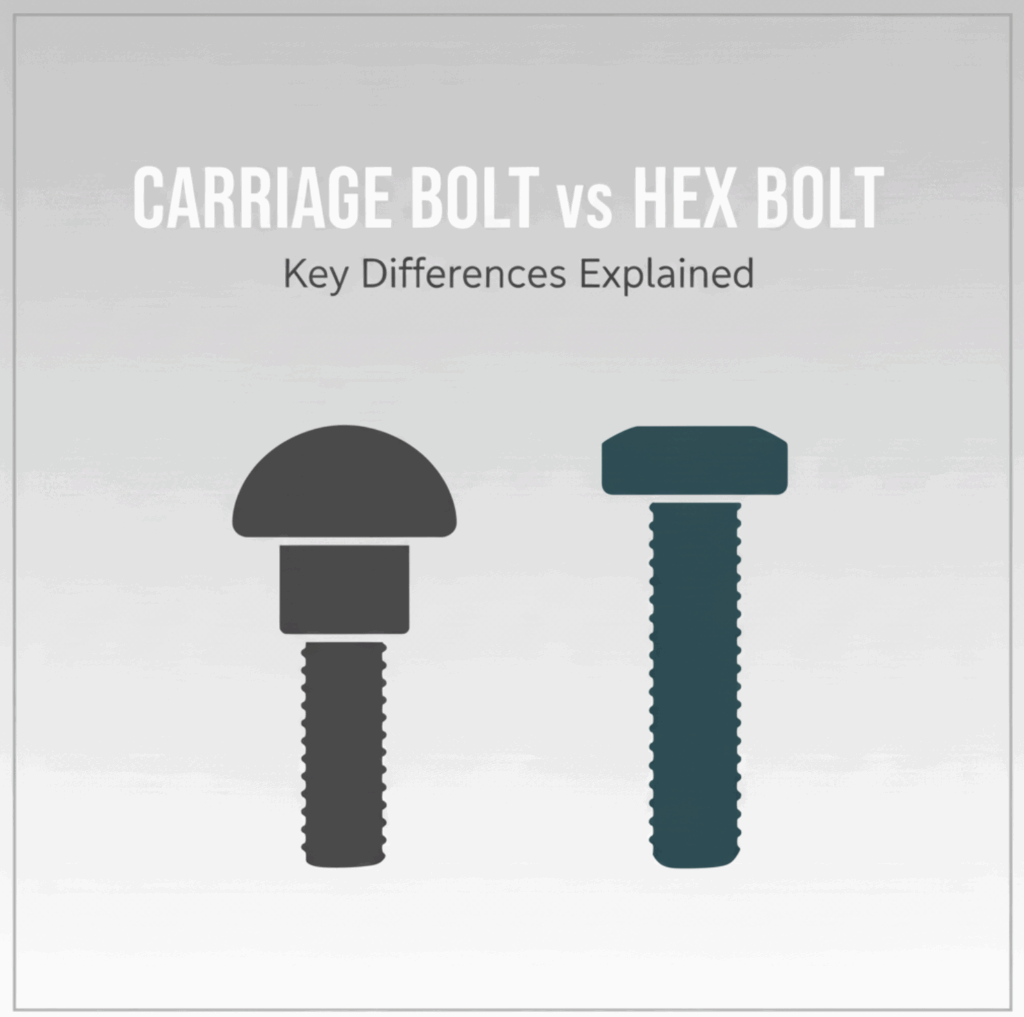
Carriage bolts, also known as coach bolts, are distinctive fasteners recognized by their rounded dome shaped head and square neck located just beneath the bolt head. The design of carriage bolts not only provides a smooth, aesthetically pleasing surface but also serves functional purposes such as preventing rotation during installation.
Design Features
A notable design feature of carriage bolts is the square neck beneath the dome shaped head. This square section locks into the material, typically wood, preventing the bolt from turning as you tighten the nut from the opposite side. This head locks firmly in place without requiring a wrench or socket on the head side, making one-sided installation possible. The smooth, domed head offers a clean finish and avoids snagging, which is especially useful in visible applications or where safety is a concern.
Typical Applications
Carriage bolts are commonly used in wood to wood fastening, outdoor projects such as fencing and decks, and situations where wood is fastened to metal. They are also favored for security applications since the smooth domed head prevents tampering from the bolt head side. These bolts are partially threaded, providing a balance between holding strength and ease of installation.
Historical Note
The origin of carriage bolts traces back to the construction of carriages and coaches, where their design helped secure wooden parts firmly without damaging the surrounding material. Hence, the alternative name coach bolts is often used synonymously with carriage bolts.
Key Differences Between Carriage Bolts and Hex Bolts
Design and Appearance
The most obvious difference between carriage bolts and hex bolts lies in their design. Carriage bolts feature a smooth, dome shaped head with a square neck underneath that fits snugly into the material to prevent rotation. Hex bolts, on the other hand, have a prominent hexagonal head designed for wrench or socket use. This difference influences not only their appearance but also functionality.
Installation Method
Carriage bolts excel in situations requiring one-sided access for installation. Thanks to the square neck that locks into a pre drilled hole, you can install carriage bolts without needing to hold the bolt head. Hex bolts generally require two-sided access for installation, as you need to tighten the nut on one side and hold the bolt head on the other, often using tapped holes or nuts.
Strength and Durability
Hex bolts are typically stronger than carriage bolts, offering higher tensile and shear strengths that make them suitable for heavy-duty use, including fastening metal components. Carriage bolts are better suited for moderate load-bearing applications, commonly involving wood and wood-to-metal fastening, where extreme strength is less critical.
Vibration Resistance
Vibration resistance is another important consideration. Carriage bolts provide superior vibration resistance due to their locking square neck design, reducing the chance of loosening under dynamic loads. Hex bolts, while strong, may require additional locking mechanisms to maintain their hold in vibration-prone environments.
Aesthetic Considerations
If aesthetics matter in your project, carriage bolts offer a cleaner, less obtrusive finish with their dome shaped head. Hex bolts present a more industrial appearance, which may be appropriate in machinery or structural contexts but less so where a smooth finish is desired.
Material Compatibility
Hex bolts are highly versatile and find use in fastening metal, concrete, plastic, and even wood, thanks to their availability in numerous materials and sizes. Carriage bolts are most effective in wood and wood-to-metal applications, where their square neck can dig into the softer wood material to prevent rotation.
Pros and Cons Summary
Carriage Bolts
- Self-locking single-sided installation due to square neck
- Good aesthetic finish with dome-shaped head
- Effective vibration resistance
- Limited strength for heavy loads
- Harder to remove if the head spins in the hole
Hex Bolts
- High strength and durability for demanding applications
- Suitable for heavy-duty and industrial use
- Requires two-sided access for installation
- Industrial appearance
- Potential to strip under excessive force on the hex head
How to Choose the Right Bolt for Your Project
Selecting the appropriate bolt depends on several factors:
- Material: For fastening wood or wood to metal, carriage bolts generally offer better performance. For metal assemblies, hex bolts are preferable.
- Load Strength: Choose hex bolts when high tensile or shear strength is necessary.
- Aesthetics: If a smooth, dome-shaped finish is a priority, carriage bolts are ideal.
- Installation Access: Carriage bolts allow installation where only one side is accessible; hex bolts require access to both sides.
- Vibration: For applications subject to vibration, carriage bolts’ square neck offers improved locking.
Consider these aspects in relation to your project’s specifications and environment to make an informed decision.
Why Choosing Between Carriage Bolts and Hex Bolts Matters for Your Project Success
Understanding the differences between carriage bolts and hex bolts empowers you to select fasteners tailored to your project’s needs. Carriage bolts offer unique advantages in one-sided installation, vibration resistance, and aesthetic appeal, particularly for wood-based applications. Hex bolts provide the high strength, versatility, and industrial design necessary for heavy-duty construction projects and metal fastening. By evaluating design, strength, material compatibility, and installation requirements, you can confidently choose the right bolt to ensure secure, durable, and effective fastening.
Expert Fastening Solutions for Your Carriage Bolt and Hex Bolt Projects
Choosing the right bolt is crucial for the strength and safety of your fastening projects. While carriage bolts and hex bolts each have unique advantages, successful results also depend on proper installation and regular maintenance. Taking the time to select the best fastener for your material and application can save you headaches and costly repairs down the line.
For reliable, high-quality carriage bolts, hex bolts, and expert advice on fastening solutions with fast shipping, contact us today at Bolt Craft to get the support you need for your next project.