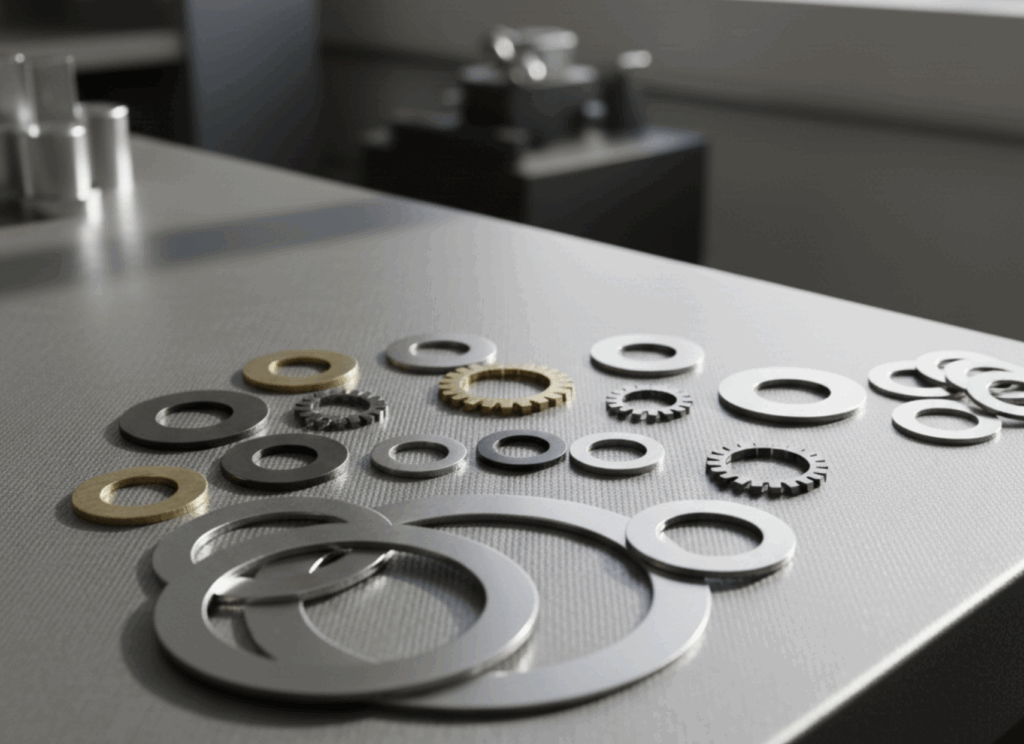
Flat washers, sometimes known simply as plain washers, are thin, typically round disks with a central hole designed to fit around threaded fasteners such as bolts and screws. Their primary purpose is to distribute the load of a fastener’s head or nut assembly over a larger bearing surface. This prevents damage to the fastened material and helps ensure the durability and stability of the connection. Most flat washers are made from metal, such as steel washers or brass, but they can also be produced from plastics and rubber to suit specific applications. The classic flat washer features a smooth, flat surface with a uniform thickness, offering a simple yet effective solution in a wide variety of fastened assemblies.
The Purpose of Flat Washers
Load Distribution
One of the fundamental functions of flat washers is to distribute the load applied by the bolt head or nut assembly across a broader surface area of the fastened material. When a threaded fastener is tightened, the force exerted can concentrate pressure on a small bearing surface, potentially deforming or damaging softer materials like wood, plastic, or thin plate metals. By placing a flat washer between the fastener and the material, the surface pressure is reduced, safeguarding the integrity of the installation.
Surface Protection
Flat washers are instrumental in protecting the surface of the material being fastened. Fastener heads and nuts, especially those made of harder metals, can scratch, dent, or otherwise damage the fastened material during tightening. Using a washer as a protective barrier helps maintain the finish and structural quality of the surface, which is particularly important in automotive assemblies, household appliances, and other applications where appearance and longevity matter.
Vibration Reduction
While flat washers themselves do not inherently provide significant vibration damping, some specialized flat washers or combinations with other washers like spring washers and lock washers help reduce loosening caused by vibrations. Lock washers, for example, grip the fastener to prevent it from turning loose, while spring washers use a spring-like shape to maintain tension under vibration.
Spacing and Gap Filling
In certain cases, washers can serve as spacers or shims to fill gaps between components. This provides the right alignment or spacing necessary for the assembly to function correctly. Choosing washers with specific thicknesses can compensate for oversized holes or uneven surfaces.
Sealing and Waterproofing
Flat washers can sometimes be employed in sealed or waterproof fastener assemblies when made from or combined with sealing materials. Rubber or plastic washers are often used to provide a barrier that prevents moisture ingress, preserving the function and safety of the joint.
Materials and Types of Flat Washers
Common materials
Steel, stainless steel, brass, plastic, and rubber. Steel washers are widely popular due to their strength and corrosion resistance, especially when coated or treated. Stainless steel washers offer enhanced corrosion resistance making them suitable for outdoor or harsh environments. Brass washers provide electrical insulation and are often used in electrical applications. Plastic and rubber washers add sealing capabilities and protect against vibration and corrosion in sensitive or waterproof assemblies.
Standards and sizes
Flat washers come in standardized sizes and dimensions according to norms such as ANSI, DIN, and ISO. These standards define parameters like outer diameter, inner hole size, and thickness to match specific fastener sizes and applications.
Overview of other types of washers related to flat washers
- Lock Washers: Designed to prevent fasteners from loosening due to vibrations. Their shape typically includes a split or teeth that bite into the fastened surfaces, increasing resistance against turning.
- Spring Washers: Characterized by a spring-like shape, these washers apply a preload force, helping absorb shock and maintain tension on the fastener under dynamic loads.
- Fender Washers: These washers have a larger outer diameter relative to the inner hole, increasing the surface area for load distribution. They are useful when oversized holes or fragile materials require more extensive bearing surfaces.
- Shoulder Washers: These provide electrical insulation and extra protection. Often used in assemblies where preventing electrical conductivity or protecting delicate components from direct metal contact is critical.
When to Use Flat Washers
- To increase surface area and distribute load for fragile or soft materials.
- When the fastener assembly is not tight enough and needs increased leverage.
- To prevent damage to surfaces, especially wood and painted finishes.
- In applications requiring waterproof or sealed joints.
- When additional spacing or filling of gaps is necessary.
When Not to Use Flat Washers
- When materials have uniform surfaces with low risk of damage.
- Fasteners with large bearing surfaces may not require washers.
- When space constraints prevent the use of washers.
- In joints where vibration or loosening is not a concern.
How to Use Flat Washers Correctly
Choosing the right size
Ensure proper hole diameter and thickness so the washer fits closely around the fastener without excessive play.
Using the appropriate material
Select washer material suitable for the environment, whether you need corrosion resistance, electrical insulation, or sealing capabilities.
Combining washers with bolts and nuts in the correct order
Typically, the order is bolt head – flat washer – fastened material – nut – flat washer if used on both sides.
Installation tips
Lubricate washers and fasteners where appropriate to prevent corrosion and ease assembly or disassembly.
Multiple washers
Using more than one washer may be beneficial to achieve extra tightness or better load distribution under specific conditions.
Advantages of Using Flat Washers
- Extending the lifespan of fastened joints by preventing localized surface damage.
- Helping prevent loosening of fasteners under vibration when combined with suitable washers.
- Protecting and preserving delicate or finished surfaces from damage.
- Offering a cost-effective way to improve maintenance and reduce repairs.
Common Applications of Flat Washers
- Industrial machinery and equipment.
- Automotive assembly and repair.
- Construction and heavy-duty equipment.
- Agricultural machinery and OEM parts.
- Household appliances and furniture.
Ensuring Durable and Reliable Fastened Assemblies with Flat Washers
Choosing and using flat washers correctly is essential for building durable, reliable fastened assemblies. By distributing the load and protecting surfaces from damage, flat washers help maintain the integrity of your joints over time. Whether you’re working with softer materials, requiring corrosion resistance, or needing precise spacing, understanding the role of flat washers in conjunction with other washer types like lock washers and spring washers will enable you to create secure, long-lasting connections in automotive assemblies, industrial machinery, household appliances, and more. Use washers thoughtfully to ensure the best performance and longevity of your fastener systems.
Choosing the right flat washers is essential for ensuring the longevity and reliability of your fastened assemblies. While flat washers provide crucial load distribution and surface protection, combining them with the proper fasteners and installation techniques maximizes their effectiveness. By selecting quality washers that match your materials and application needs, you can prevent damage, reduce maintenance, and improve overall performance. For premium flat washers, lock washers, spring washers, and custom fastening solutions with fast shipping across the USA, reach out to us today—your trusted partner in durable, tailored fastening products.