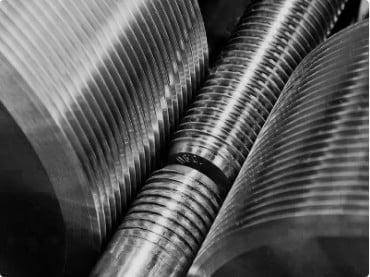

Stud bolts and threaded rods are two of the most commonly confused fasteners in industrial and OEM procurement. Despite looking nearly identical at first glance, these two fasteners serve distinct purposes, perform differently under load, and carry different cost implications depending on your application. If you have ever second-guessed a specification or swapped one for the other without fully understanding the tradeoff, this guide covers exactly what you need. By the end, you will know which fastener is right for your joint, your environment, and your budget before the order is placed.
Stud Bolt vs Threaded Rod: Quick Comparison
| Category | Stud Bolt | Threaded Rod |
| Thread Coverage | Threads on both ends with smooth unthreaded shank, or fully threaded entire length | Fully threaded from end to end along the entire length |
| Length Classification | Typically under 12 inches | Typically 12 inches and above |
| Head | Headless | Headless |
| Nut Requirement | One or two nuts depending on configuration | Two nuts, one at each end |
| Clamping Force | Superior and repeatable; torque applied to nut only | Moderate; load distributed across full rod length |
| Torsional Stress on Fastener | Minimal; fastener body does not rotate during installation | Higher; continuous threading concentrates stress under load |
| Installation Method | Threaded into tapped bore on one end, nut on the other | Nuts at both ends; can be cut to length in the field |
| Field Adjustability | Fixed length; must be specified to exact dimensions | Cuttable to any required length without special tooling |
| Reusability | High; supports multiple assembly and disassembly cycles | Moderate; not designed for precision torque cycling |
| Vibration Resistance | High; preferred in vibration-critical joints | Low; not suitable for vibration-heavy environments |
| High Temperature Suitability | Yes; grades such as A193 B7 and B8M rated for extreme heat | Limited; standard grades not recommended for high temperature applications |
| Common Grades | ASTM A193 B7, B7M, B8, B8M, L7, metric 8.8, 10.9, 12.9 | SAE Grade 2, Grade 5, Grade 8, ASTM A307, A2 stainless, A4 stainless |
| Common Materials | Alloy steel, stainless steel, carbon steel | Carbon steel, stainless steel, galvanized steel, brass, aluminum |
| Typical Applications | Flanged connections, engines, exhaust systems, pressure vessels, agricultural OEM assemblies | Structural framing, HVAC support, conduit systems, equipment frames, metal buildings |
| Unit Cost | Higher | Lower |
| Machining Required | Yes; requires precisely tapped receiving hole | No; compatible with standard pre-drilled holes and nuts |
| Best For | High-load, high-torque, and vibration-resistant joints requiring structural integrity | General purpose applications where length flexibility and lower cost are priorities |
What Is a Stud Bolt?
A stud bolt is a headless fastener with external threading on both ends or along the full length. One end threads into a tapped bore in the mating component, and the other end receives a nut to complete the joint. In through-hole flange and joint assemblies, two nuts are used, one on each threaded end, to secure the connection from both sides. The absence of a head is not just a design detail. It is a functional engineering advantage. When you torque a hex cap screw, you are applying rotational stress to the fastener body itself as it seats. With a stud bolt, torque is applied only to the nut, which eliminates torsional stress on the shank and produces more consistent, repeatable preload. In high-load, high-torque, and vibration-heavy environments, that distinction directly affects joint reliability and service life.
Types of Stud Bolts
Stud bolts come in several configurations, each designed for specific assembly requirements. Fully threaded studs carry continuous threads the entire length and are common where thread engagement depth varies or where both ends require nut fastening. Double-end studs feature a smooth unthreaded shank in the center with threaded ends of equal or differing lengths, commonly used in engine and flange assemblies. Tap-end studs have a short threaded end designed to thread permanently into a tapped hole, with a longer nut-end thread for assembly and disassembly. Flange studs include chamfered ends to ease nut starting in confined spaces. Weld studs are friction-welded directly to a surface, eliminating the need for a tapped hole. Single-end studs are threaded on one end only and are used in specialized mounting configurations. For teams sourcing to international specifications, DIN 835 covers double-end studs with a nut-end thread length approximately equal to the diameter, while DIN 939 specifies double-end studs with a longer tap-end thread for deeper engagement.
What Is a Threaded Rod?
A threaded rod is a fully threaded cylindrical bar with continuous threads running the entire length from one end to the other. As a general industry rule, fasteners at 12 inches or longer are classified as threaded rods rather than studs, though this distinction can vary by supplier and application. The key advantage of a threaded rod is versatility. It can be cut to any required length in the field, accommodates nuts at both ends, and works across a broad range of structural and positioning applications without requiring a precisely tapped receiving hole. Threaded rods are available in carbon steel, stainless steel, galvanized steel, brass, and aluminum, making them adaptable to a wide range of environmental conditions and budget requirements.
Types of Threaded Rods
Standard fully threaded rods are the most common type, available in a wide range of diameters, lengths, and materials for general construction and industrial use. Double-side threaded rods are threaded at both ends with a smooth or shorter-thread center section, used where two separate components need to be secured at fixed distances. Internally threaded rods feature a hollow core with internal threads and are used in specialty assemblies and suspension systems where external threading is not practical. Hollow-core rods serve lighting fixture installations, conduit support, and similar applications where a cable or wire must pass through the fastener. High-strength short-length rods such as ASTM A193 B7 grade provide the tensile strength of a stud bolt in a rod format and are used in industrial environments with elevated load requirements. DIN 975 covers long threaded rods in standard thread profiles, while DIN 976 applies to shorter, high-strength versions. Knowing which type you need before specifying the grade reduces procurement errors and lead time.
Stud Bolt vs Threaded Rod: Key Differences at a Glance
Choosing between these two fasteners comes down to understanding how each one performs across five categories: thread coverage, length and size classification, clamping force, installation method, and reusability. The sections below evaluate each factor individually so you can weigh the attributes that matter most for your specific application.
Thread Coverage
Double-end stud bolts carry threads on both ends separated by a smooth, unthreaded shank. That smooth shank is not wasted material. It concentrates clamping load at the threaded engagement points and provides a clean shear plane across the joint. Fully threaded studs and threaded rods carry threads the entire length, which increases flexibility in assembly but distributes stress differently across the fastener body. The fully threaded format of a standard rod is what makes it cuttable to any required length in the field, a major practical advantage in structural and construction applications. However, continuous threading under heavy shear force or cyclic loading creates higher stress concentration at the threads, which is why fully threaded rods are not the right specification for flanged connections, pressure systems, or vibration-critical joints.
Length and Size Classification
The general industry rule is that fasteners under 12 inches are classified as studs, while those at 12 inches and above are classified as threaded rods. This matters during procurement because the two classifications typically fall into different part numbering systems, specification standards, and pricing tiers. A fastener specified simply as a long rod or a short stud without dimensions and grade information leaves too much room for error. Best practice is to specify by major diameter, thread pitch, overall length, thread length on each end, and grade. That level of detail eliminates ambiguity regardless of what the supplier calls the part.
Clamping Force and Load Performance
This is the most important engineering distinction between the two fasteners. When you install a stud bolt, torque goes to the nut only. The fastener body does not rotate during tightening, which means no torsional stress is added to the shank at the moment of maximum preload. The result is more consistent, repeatable clamping force across every fastener in the joint, which is critical in flanged connections, pressure-sealed systems, and engine assemblies where uneven preload creates leaks, fatigue failure, or loosening under vibration. Threaded rods distribute load across the full rod length and are well-suited to tension in structural framing and support applications. They are not designed for high-preload torque cycling, and using them in joints that require precise clamping force is a specification error that shows up in maintenance calls, not on the assembly floor.
Installation Method
Stud bolt installation requires a tapped receiving hole on the tap end, which adds machining cost to the assembly but results in a more controlled, aligned joint. The nut-end threads receive a nut for final torque. In through-hole configurations, nuts go on both ends. Threaded rods require nuts at both ends and can be cut to length in the field without special tooling. However, setting a threaded rod precisely in a structural or mechanical assembly requires more setup time for positioning, alignment, and securing before final torque. If your assembly uses pre-drilled holes or requires frequent disassembly, the installation method of each fastener type has real cost and time implications beyond the unit price of the fastener itself.
Reusability and Maintenance Cycles
Stud bolts support repeated assembly and disassembly without compromising the joint. Because torque goes to the nut and not the stud body, the stud itself does not experience the rotational wear that shortens the service life of other fastener types. In maintenance-heavy equipment such as agricultural machinery, industrial flanges, and engine assemblies, this is not a minor consideration. If your team is pulling and reinstalling components on a regular service cycle, a stud bolt preserves thread engagement in the tapped bore and maintains accurate torque values over multiple cycles. Threaded rods are serviceable, but they are not engineered for repeated precision torque cycling and are better suited to applications where the fastener stays in place long term.
Material and Grade Options
Both fastener types are available across a wide range of grades and materials, and selecting the correct specification is just as important as selecting the correct fastener type. The grade must match load requirements, operating temperature, environmental exposure, and any applicable standards referenced on your engineering drawings or procurement specs. Getting the geometry right but specifying the wrong material is a common source of premature fastener failure.
Common Grades for Stud Bolts
ASTM A193 B7 is the most widely used grade for stud bolts in general industrial bolting, produced from chromium-molybdenum alloy steel with high tensile strength and reliable performance across a broad operating temperature range. B7M is the controlled hardness version used in hydrogen service environments where sulfide stress cracking is a concern. L7 is specified for low-temperature applications where standard alloy steel becomes brittle. B8 and B8M cover stainless steel stud bolts in Grade 304 and Grade 316 respectively, used in corrosive or high-temperature environments including chemical processing and exhaust systems. For OEM and automotive applications, metric grades 8.8, 10.9, and 12.9 are the standard references, with grade selection typically dictated by the pressure, temperature, and torque specification on the engineering drawing.
Common Grades for Threaded Rods
SAE Grade 2 covers general light-duty use in applications where load requirements are low and cost is a primary consideration. Grade 5 applies to moderate structural applications requiring higher tensile strength without the cost of alloy steel. Grade 8 is specified for higher-load requirements in assemblies where threaded rod is an acceptable fastener type. ASTM A307 covers standard construction bolting and is common in building construction and structural steel applications. For corrosion-resistant applications, stainless steel A2 (Grade 304) and A4 (Grade 316) are the standard choices, with A4 providing superior resistance in chloride-heavy environments including marine and coastal construction. Galvanized threaded rod meeting ASTM A153 or hot-dip galvanized standards is widely used in outdoor structural applications, metal buildings, and any environment where long-term corrosion resistance matters more than high tensile strength.
Where Each Fastener Performs Best: Application Breakdown
The right choice between a stud bolt and a threaded rod depends entirely on the mechanical demands of the joint, the operating environment, and the assembly requirements of your project. Understanding where each fastener type excels prevents over-engineering on one end and under-specifying on the other.
Where Stud Bolts Excel
Stud bolts are the correct specification in flange assemblies for piping and pressure systems, where consistent preload across all fasteners in the joint is required to maintain a seal. Engine mounting and exhaust system connections specify stud bolts because the thermal cycling and vibration in those environments will loosen or fatigue any fastener that does not maintain precise clamping force. Heavy machinery and agricultural OEM assemblies rely on manufactured stud bolts where torque control and joint integrity across multiple maintenance cycles are non-negotiable. High-temperature environments in petrochemical plants, power generation facilities, and industrial processing equipment are designed around stud bolt specifications for exactly the same reason. If your assembly involves flanged connections, extreme heat, vibration, or repeated service access, a stud bolt is the specification that protects both the joint and the equipment.
Where Threaded Rods Excel
Threaded rods are the correct and cost-effective choice in structural construction framing, where adjustable length and nut-at-each-end simplicity align with how the work gets done. HVAC and electrical conduit support systems use threaded rod extensively because the load is primarily tension in a controlled environment, and the ability to cut to length in the field reduces installation time. Equipment frames, light machinery, and subassembly positioning applications in automotive repair use threaded rod where precise clamping force is not a requirement. In transportation applications involving subassembly mounting and general-purpose positioning, threaded rods provide secure connection capability without the cost of a precision stud bolt specification. For projects where budget and installation flexibility matter more than high preload or vibration resistance, threaded rod is the right solution.
Stud Bolt vs Threaded Rod: Pros and Cons
Understanding these tradeoffs helps engineering and procurement teams make faster decisions and reduces the risk of specifying a more expensive fastener than the joint requires, or specifying a less capable one and discovering the gap during service.
Stud Bolt Pros and Cons
Stud bolts deliver superior and repeatable clamping force because torque is applied to the nut rather than the fastener body. Low torsional stress during installation extends fastener service life and preserves thread engagement in the tapped bore across multiple assembly cycles. Stud bolts are engineered for high-load and vibration-resistant joints, available in a wide range of high-strength and corrosion-resistant grades including ASTM A193 B7, B8, B8M, and metric 10.9 and 12.9. The tradeoffs are higher unit cost compared to threaded rod, a requirement for precisely tapped receiving holes that adds machining cost, and less flexibility in applications where field-adjustable length is a practical need.
Threaded Rod Pros and Cons
Threaded rod offers flexible length that can be cut to size in the field without special tooling, lower unit cost across all standard grades and materials, and a straightforward installation process using nuts at each end. It covers a broad range of light-to-moderate load applications across construction, industrial settings, and general-purpose fastening. The limitations are real in load-critical contexts. Continuous threading creates higher stress concentration under heavy loads. Threaded rod is not suitable for high-preload or vibration-critical joints. It does not provide the clamping precision of a properly specified stud bolt, and structural installation can require more setup and alignment time than a tapped-hole stud bolt assembly.
How to Choose: A Practical Decision Framework
If your application involves controlled preload, flanged connections, pressure systems, engine or drivetrain components, exhaust systems, or assemblies requiring repeated maintenance access, specify a stud bolt. If it involves structural support, length adjustment, light-to-moderate loads, HVAC or conduit support, or general construction framing, a threaded rod is the appropriate and more cost-effective choice.
The most avoidable procurement errors come from specifying by name alone without locking in grade, material, and dimensional requirements. Working with a fastener supplier who can advise on grade, thread profile, and custom configurations before the order is placed protects you from substitutions that look acceptable on paper but do not perform in the field. BoltCraft responds quickly to quote requests and supports flexible stock and release programs across a full range of standard and custom stud bolts and threaded rods. Every order is backed by a 100% OEM satisfaction guarantee. If you are ready to specify, contact us for a fast quote.
How to Measure a Stud Bolt
Correct measurement is the foundation of a correct specification. Four dimensions are required: overall length measured end to end, thread length on each end, major diameter, and thread pitch. For double-end studs, the thread lengths on each end may differ depending on whether one end is a tap end threading into a tapped bore and the other is a nut end receiving a fastening nut. Always cross-reference your measurements against the torque specification and the engineering drawing to confirm the grade is compatible with the clamping requirement of the joint. A stud bolt that is the right size but the wrong grade will still fail.
How to Cut a Threaded Rod to Length
Cutting a threaded rod in the field is straightforward when done correctly. Mark the desired length clearly using a marker or scribe. Secure the rod firmly in a vise or clamp to prevent movement during the cut, as a shifting rod produces a rough or angled cut end that makes nut installation difficult. Cut with a hacksaw or an angle grinder cutoff wheel, then deburr or file the cut end to remove burrs and restore a clean thread entry for the nut. A practical technique that saves time: thread a nut onto the rod before making the cut and spin it back off after. The nut clears the cut end as it comes off, restoring the thread entry point and making secure connection far easier on the first assembly attempt. Thread integrity at the cut end is not optional. A damaged entry thread that is not corrected before installation creates the appearance of a secure connection without the actual clamping performance.
Source Stud Bolts and Threaded Rods From BoltCraft
BoltCraft manufactures and supplies both stud bolts and threaded rods across a full range of grades, materials, and custom configurations. Whether you are sourcing for an agricultural OEM assembly, a heavy-duty construction project, or a high-volume industrial run, BoltCraft responds quickly to quote requests and supports flexible stock and release programs that keep your production schedule moving. Our 100% OEM satisfaction guarantee means you get the fastener that performs to spec, every time. Contact us to request a quote and get the right fastener specified before your next run.
Frequently Asked Questions
What is the difference between a stud bolt and a threaded rod?
A stud bolt is a precision fastener with threads on both ends used in high-load, torque-critical joints such as flanges, engines, and heavy machinery. A threaded rod is a fully threaded bar suited for structural support and length-adjustable applications with lighter load requirements. The key differences lie in load performance, thread configuration, installation method, and intended engineering use.
Can a threaded rod be used in place of a stud bolt?
In low-load structural or positioning applications, a threaded rod may be acceptable. However, in joints that require precise preload, vibration resistance, or high-temperature sealing, a threaded rod is not a suitable replacement for a stud bolt. Always consult the engineering drawing or a fastener specialist before substituting one fastener type for another in a load-bearing joint.
What grades are available for stud bolts?
Common grades include ASTM A193 B7, the most widely used grade in industrial bolting, along with B7M, B8, B8M, and L7 for specialized environments. Metric grades 8.8, 10.9, and 12.9 are common in OEM and automotive applications. Grade selection depends on temperature range, load requirements, and the operating environment of the joint.
How long can a threaded rod be?
Standard threaded rods are available in lengths up to 10 to 12 feet, and custom lengths can be ordered depending on the supplier. In the field, rods can be cut to any required length as long as the cut end is properly deburred and the thread entry is restored before installation.
What industries use stud bolts most often?
Stud bolts are common in oil and gas, petrochemical, power generation, heavy industrial machinery, agricultural equipment manufacturing, and automotive OEM assembly. Any application involving flanged joints, pressure systems, or precision torque control typically specifies stud bolts over standard hex cap screws or threaded rods.